IMF warns Philippines against suspending excise tax on gasoline

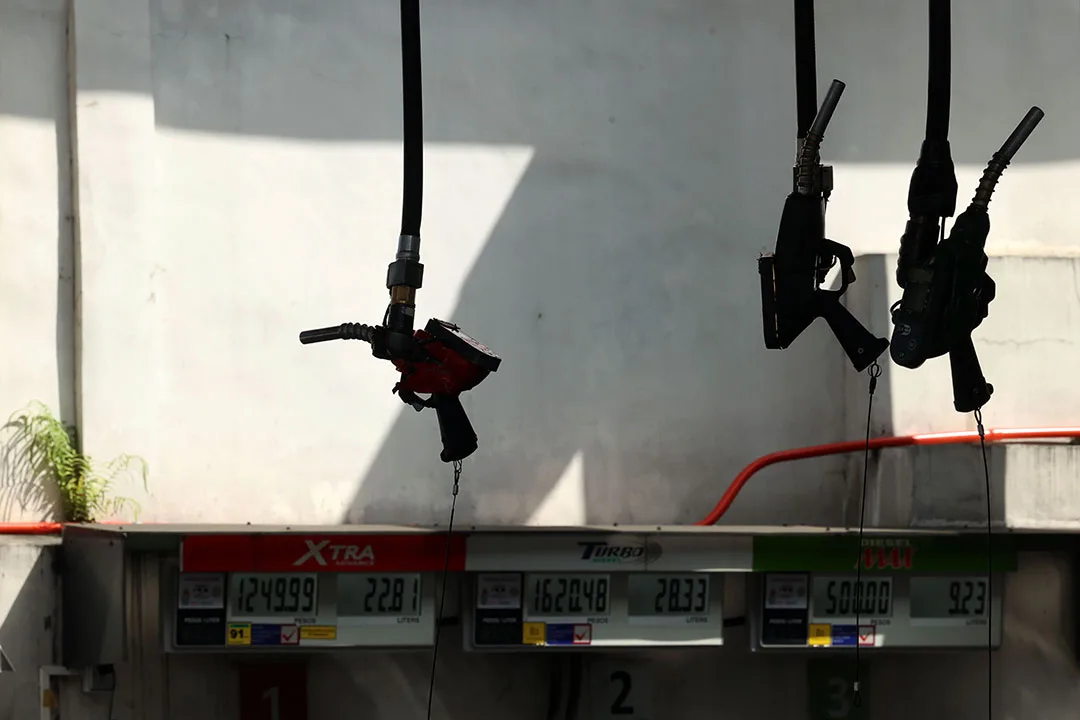
The International Monetary Fund has issued a cautionary note to the Philippine government regarding its fuel tax policies, specifically advising against the suspension of excise taxes on gasoline. While the global financial institution expressed support for the recent tax relief provided for kerosene and liquefied petroleum gas, it warned that extending such measures to gasoline could undermine the nation's fiscal consolidation goals. Andrea Pescatori, the IMF Mission Chief for the Philippines, characterized the suspension of gasoline taxes as a move that would not be progressive for the country's economic strategy.
Targeted Relief for LOW Income Households
During a briefing held on Friday following an Article IV Consultation, Pescatori explained that the current tax exemptions for kerosene and LPG are appropriate because they primarily assist the most vulnerable segments of the population. He noted that these fuels are essential for low-income families and are frequently used in rural areas and the agricultural sector. Regarding the decision to pause taxes on these specific fuels, Pescatori stated, Well, it seems that those are used mostly by the low-income segment of the population, and also (in) rural areas. It’s important in agriculture. So, that’s why we think that this is actually an appropriate measure.
President Ferdinand R. Marcos, Jr. recently formalized these measures by signing Executive Order No. 125. This order temporarily halts the collection of excise taxes on kerosene and LPG, marking the second time such a policy has been implemented since the start of the Middle East conflict in late February. However, the order includes specific exclusions, as the tax relief does not apply to kerosene used as aviation fuel or LPG utilized as a raw material for petrochemical production or motive power.
Middle East WAR and Crude OIL Prices
The decision to adjust tax policies comes as the Department of Energy confirmed that the 30-day average price of Dubai crude oil surpassed the $80-per-barrel mark. This threshold serves as a trigger for potential fuel excise tax freezes or reductions. Market volatility has been exacerbated by the reescalation of the Middle East war in early September, which led to a significant spike in local pump prices and prompted public calls for the government to freeze taxes on gasoline and diesel.
Last week, fuel retailers in the Philippines implemented their third consecutive week of price hikes. These increases pushed the cost of gasoline as high as P111.60 per liter, while diesel reached P121 per liter and kerosene hit P147 per liter. Despite these peaks, motorists are looking forward to price rollbacks this week as global market pressures ease. Projections suggest that diesel prices could drop by as much as P8 per liter, with kerosene falling by up to P6 and gasoline seeing a modest reduction of P1 per liter.
Budget Neutral Fiscal Consolidation Efforts
The IMF has praised the administration of President Marcos Jr. for utilizing measures that are both time-bound and targeted. Pescatori highlighted that the government has managed to maintain a budget-neutral position despite the tax suspensions. This balance is achieved because the loss in revenue from kerosene and LPG excise taxes is being offset by higher value-added tax receipts generated by elevated gasoline prices.
Pescatori noted that, So far, the government has compensated, has offset the loss from the excise taxes on oil — kerosene and LPG — with higher VAT (value added tax) receipts because of higher gasoline prices. He further observed that, So, this has been sort of a budget neutral. Because the 12% VAT is calculated as a percentage of the total fuel cost, the government collects more revenue as gasoline prices rise. Pescatori argued that keeping the VAT on gasoline unchanged allows the state to generate the necessary funds to support the targeted relief for other fuels.
Source: bworldonline.com · 2026-09-28