CoreWeave counters a key bear case on the AI trade. What it means for our data center stocks

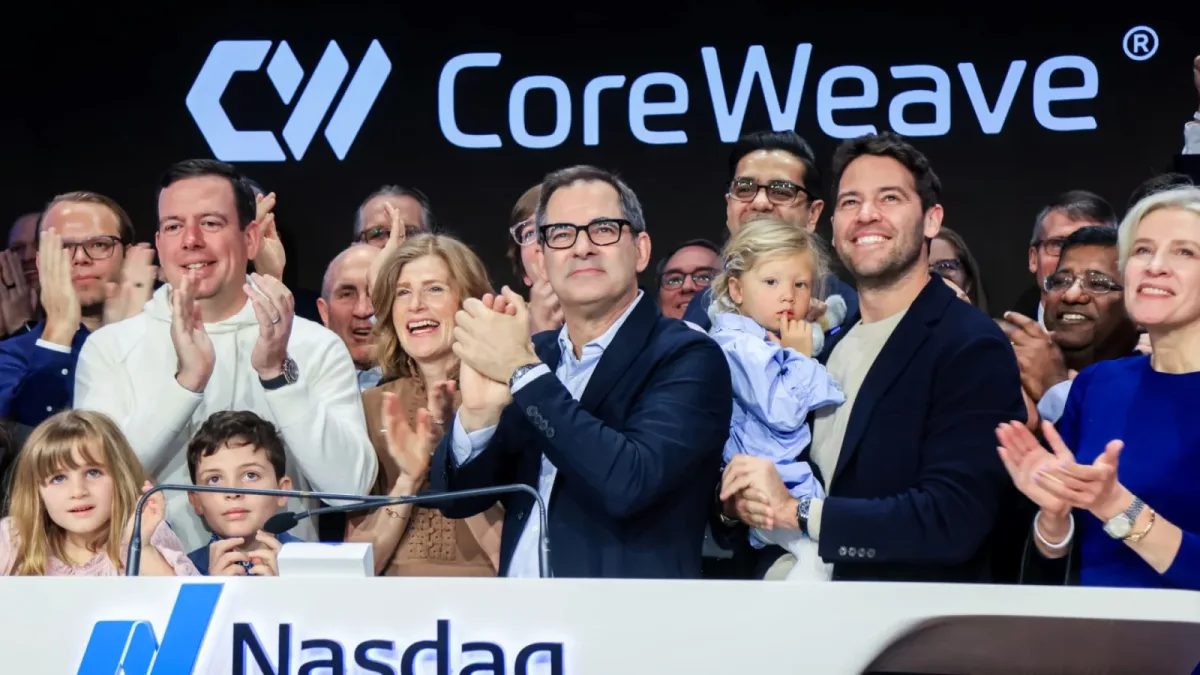
The recent earnings call and subsequent interview with CNBC by CoreWeave, an AI compute provider, have provided a significant boost to the artificial intelligence trade, particularly for companies like Nvidia and other data center stocks. The commentary on the longevity of Nvidia's chips has alleviated concerns about technological obsolescence, a key bear case against the AI trade. According to CoreWeave CEO Mike Intrator, "Older generations of GPUs are going to have a longer useful life than anyone anticipated," which suggests that the hardware will not need to be replaced as frequently as previously thought.
KEY Takeaways
This news has significant implications for data center builders like Amazon and Microsoft, as it gives them more confidence in the return on their current spending. The added sustainability of the capital expenditure cycle is a good thing for the future revenues of data center suppliers, including chipmakers like Nvidia and memory supplier Micron. Nvidia's shares were up 3% on Wednesday, while Corning, a networking cable provider, rose 5.2%, and turbine maker GE Vernova increased 2.7%. Micron, a recent addition to the portfolio, jumped 4.9%. CoreWeave's own stock surged nearly 20% thanks to what Jim Cramer called "a true breakout quarter," with revenue topping expectations and losses narrower than expected.
The idea that Nvidia's graphics processing units (GPUs) and other AI chips may have shorter useful lives than operators assume has been a major bear case against the AI trade. However, CoreWeave's finance chief, Nitin Agrawal, noted that the company "recently signed an A100 contract that extends into 2029 at an attractive price," which suggests that older generations of GPUs can still be contracted for a longer term at a higher price. This is significant, as it means that data center operators can earn an attractive return on their investment even if the hardware is not replaced as frequently as previously thought.
Data Center Outlook
Amazon CEO Andy Jassy recently commented on the breakeven times on AI computing hardware, stating that "for servers and networking equipment, on average, it takes a little less than three years to break even on that investment." He also noted that "the servers currently have a useful life of at least five to six years, and most of our AI capacity these days is being contracted for at least five-year terms." This suggests that operators can earn an acceptable return during the initial contract term, and every additional year of economically productive life represents upside that wasn't required to justify the original investment. CoreWeave's business was never designed to rely on customer re-contracting, but the company is now seeing longer utilization at higher prices, offering significant further upside.
The most cutting-edge models and applications may require the latest and greatest hardware, but there are still many profitable use cases for older-generation chips. This is where the bears' argument on obsolescence comes up short, as they miss the fact that continued innovation in hardware and software is actually extending the economic life of older chips. Intrator laid out three factors that make the extended useful life possible: the Nvidia hardware, Nvidia's developer software, and delivery via the CoreWeave cloud. While Intrator is obviously talking his book, his first two reasons carry far-reaching implications for investors in AI names.
Future Implications
The implications of CoreWeave's update are significant, as it suggests that the capex benefits will last longer than previously thought, giving big AI spenders a margin of safety. This translates into good news for companies on the receiving end of all the capex, including semiconductor players like Nvidia, Broadcom, Intel, and Micron, as well as companies like Corning, Eaton, and GE Vernova. The more clarity that management teams and investors have on the ROI potential of that spending, the more sustainable it will be. Nvidia's funding partnership with BlackRock, Blackstone, Brookfield Asset Management, Goldman Sachs, and KKR is a major development in the AI buildout. The initiative appears to be working on a new asset-backed security that will leverage data centers as cash-generating collateral that supports new asset-backed securities.
Overall, CoreWeave's update is a bad day for the bears, and it suggests that the AI trade has plenty of room to run into 2027 and beyond. The company's bullish update on A100 longevity adds to the important insight that Jassy provided this earnings season, and it shows why some of the smartest and most powerful financiers in the world have come around to the idea of compute as an investable asset class. As a result, investors may be more understanding and forgiving of high levels of capex, given that there is more time to make good on the investments.
Source: cnbc.com · 2026-08-12