Federal Reserve rate hike reflects new world of sticky inflation and faster growth
The low interest-rate, low-inflation world that lasted for nearly 15 years after the Great Recession is over and a higher-priced, higher-rate world is taking its place.

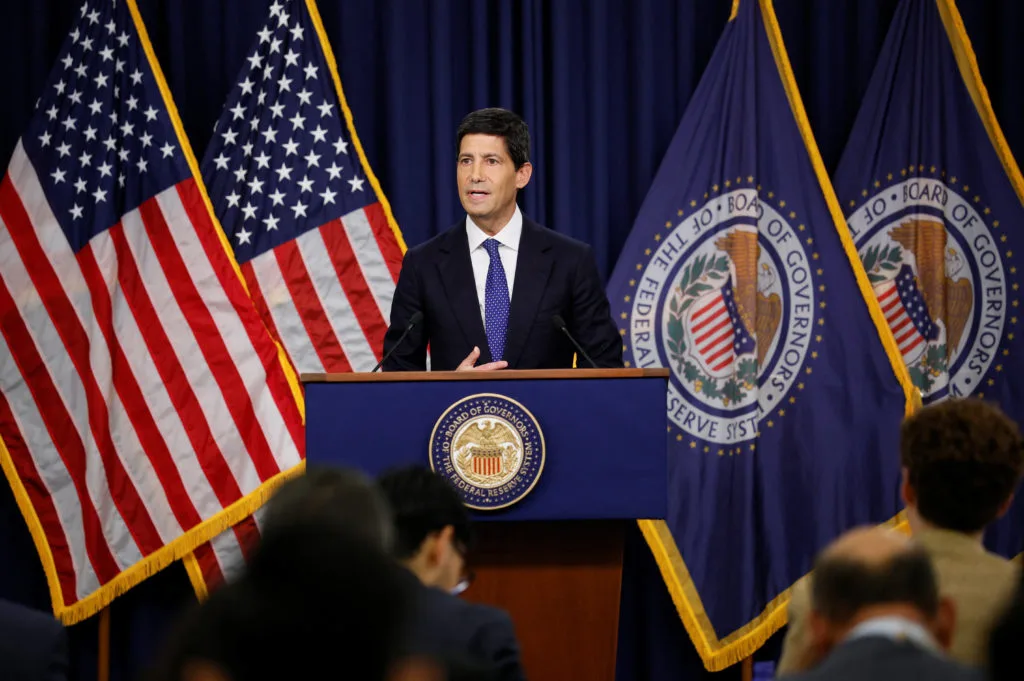
President Donald Trump has once again criticized the Federal Reserve after the central bank lifted its benchmark interest rate on Wednesday, but economists say the Fed’s move matters less for long‑term borrowing costs than the broader forces shaping the economy.
Economic Momentum despite Shocks
The United States economy continues to expand at a steady pace, even as it absorbs a series of repeated disruptions, and some analysts suggest the pace may be picking up. Inflation, however, stays firmly elevated. Large technology companies are tapping massive credit lines to fund new data‑center projects, while the federal government persists in running sizable annual budget deficits. Those dynamics, according to market observers, point toward higher rates independent of any single policy decision.
END of the Low‑rate ERA
The era of persistently low rates and subdued inflation that followed the Great Recession for almost fifteen years has given way to a new environment marked by higher prices and higher borrowing costs. Mortgage rates that hovered in the 3 percent range throughout the 2010s and fell even lower during the COVID‑19 pandemic are now a relic. The average rate on a 30‑year mortgage climbed to 6.95 percent last week, marking the steepest level in more than a year and a half.
Driving Factors Behind the Shift
Joe Brusuelas, chief economist at RSM, a tax‑consulting firm, identified a fundamental change in the economy as a primary catalyst. He explained that the pre‑pandemic period was characterized by weak consumer and business demand, whereas today robust spending by households and firms is colliding with supply‑side constraints. The conflict involving Iran has pushed oil and gas prices higher, and the rapid expansion of artificial‑intelligence applications is being hampered by a shortage of computer chips, electronic equipment and qualified labor.
Structural Transformation
“We’ve undergone a structural transformation of the economy,” Brusuelas said. “The regime change in inflation and interest rates is the outcome.” His assessment underscores that the current mix of strong demand and persistent bottlenecks is reshaping the macroeconomic landscape, making higher rates a likely long‑term feature.
What This Means for Borrowers
For consumers eyeing mortgages, the jump to nearly 7 percent signals a departure from the ultra‑cheap financing that defined the previous decade. Businesses, especially those in the technology sector, must factor higher financing costs into plans for data‑center expansion and AI development. Meanwhile, the federal budget’s continued deficits add to the upward pressure on rates, according to the analysts cited.
In sum, while President Trump focuses his rhetoric on the Federal Reserve’s recent hike, economists argue that the underlying trajectory of the economy—marked by solid growth, stubborn inflation, supply‑chain strain and expansive fiscal gaps—will keep interest rates elevated for the foreseeable future.
Source: pbs.org · 2026-09-20