How a niche copper trade became a real-time gauge of Trump’s next tariff move

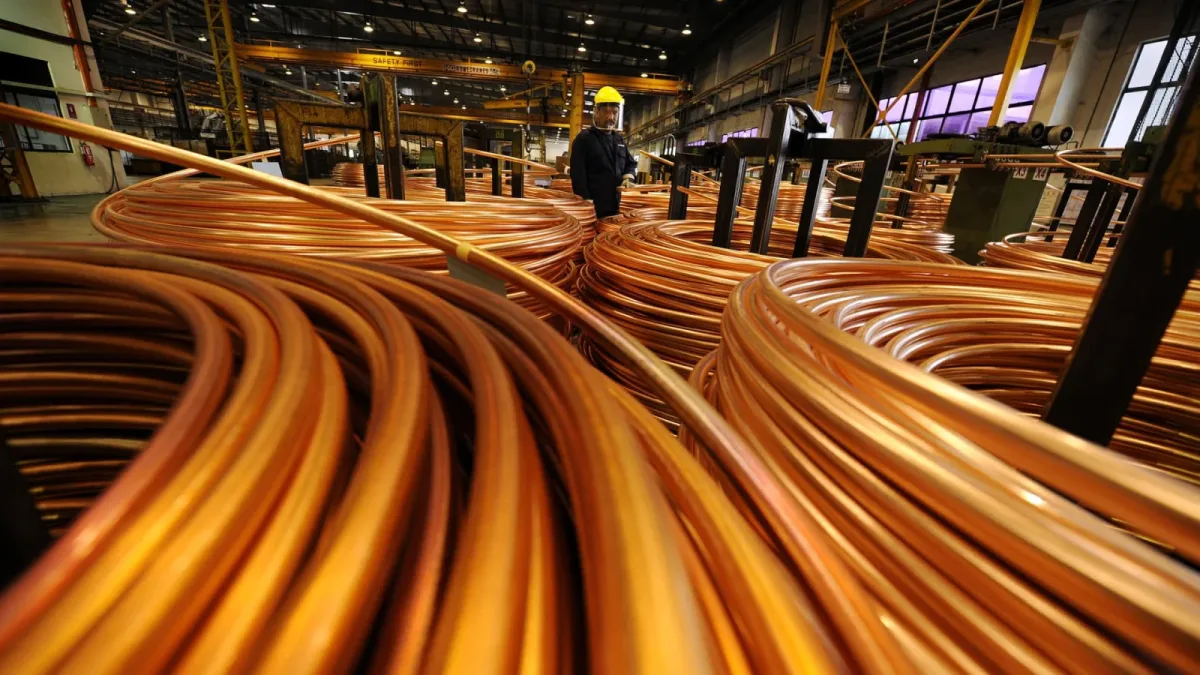
The copper market has been experiencing a significant surge, with futures prices reaching a record high of almost $6.90 per pound last week, driven in part by its role as a key component in various industries such as construction, electronics, and transportation. As a result, a niche copper trade has emerged as a real-time indicator of the potential for new tariffs, particularly those related to the ongoing White House investigation into refined copper under Section 232. This development has significant implications for physical traders, banks, hedge funds, producers, and consumers who have historically used the spread between U.S. COMEX futures and London Metal Exchange prices to profit from temporary price differences and hedge against price risk.
Market Trends
The arbitrage trade in question has long been driven by factors such as fluctuations in Chinese demand or supply disruptions in South America, which can create temporary price differences between the two markets. However, according to analysts at Societe Generale, the prospect of fresh tariffs on refined copper has become a major driver of this trade, with investors increasingly using the COMEX premium as a gauge of further duties. This shift in focus reflects the growing uncertainty surrounding U.S. trade policy, particularly with regards to the use of Section 232 investigations to impose tariffs on imported goods. As a result, market participants are closely watching the spread between U.S. COMEX futures and London Metal Exchange prices for signs of potential tariff moves.
The use of the COMEX premium as a tariff gauge is a relatively new development, and it reflects the evolving nature of the copper market in response to changing global economic conditions. Copper has long been seen as a broader economic barometer, given its widespread use in various industries, and its price movements are often closely watched for signs of trends in the global economy. The current surge in copper prices, which has been ongoing for over a year, is a testament to the metal's continued importance as a key component in many industries. As the White House investigation into refined copper continues, market participants will likely remain focused on the COMEX premium as a potential indicator of future tariff moves, highlighting the increasingly complex and interconnected nature of global trade and commodity markets.
Global Trade Implications
The implications of this development are significant, as it suggests that market participants are becoming increasingly sensitive to the potential for new tariffs and are seeking to hedge against potential price risks. This, in turn, could have significant implications for the broader economy, as changes in copper prices can have ripple effects throughout various industries. As such, the copper market will likely remain a key area of focus for investors and market participants in the coming weeks and months, particularly as the outcome of the White House investigation into refined copper remains uncertain. With the COMEX premium emerging as a key gauge of tariff risk, market participants will be closely watching for any signs of changes in U.S. trade policy, highlighting the complex and often interconnected nature of global commodity markets.
The ongoing uncertainty surrounding U.S. trade policy, particularly with regards to the use of Section 232 investigations, has created a sense of unease among market participants, who are eagerly awaiting the outcome of the White House investigation into refined copper. As the investigation continues, the copper market will likely remain volatile, with prices potentially fluctuating in response to any developments or announcements related to the investigation. With the COMEX premium serving as a real-time indicator of tariff risk, market participants will be able to gauge the potential for new tariffs and adjust their strategies accordingly, highlighting the importance of staying informed and up-to-date in today's fast-paced and ever-changing global commodity markets.
Source: cnbc.com · 2026-08-14