South Korea's Stock Market Is Back in a Bull Market

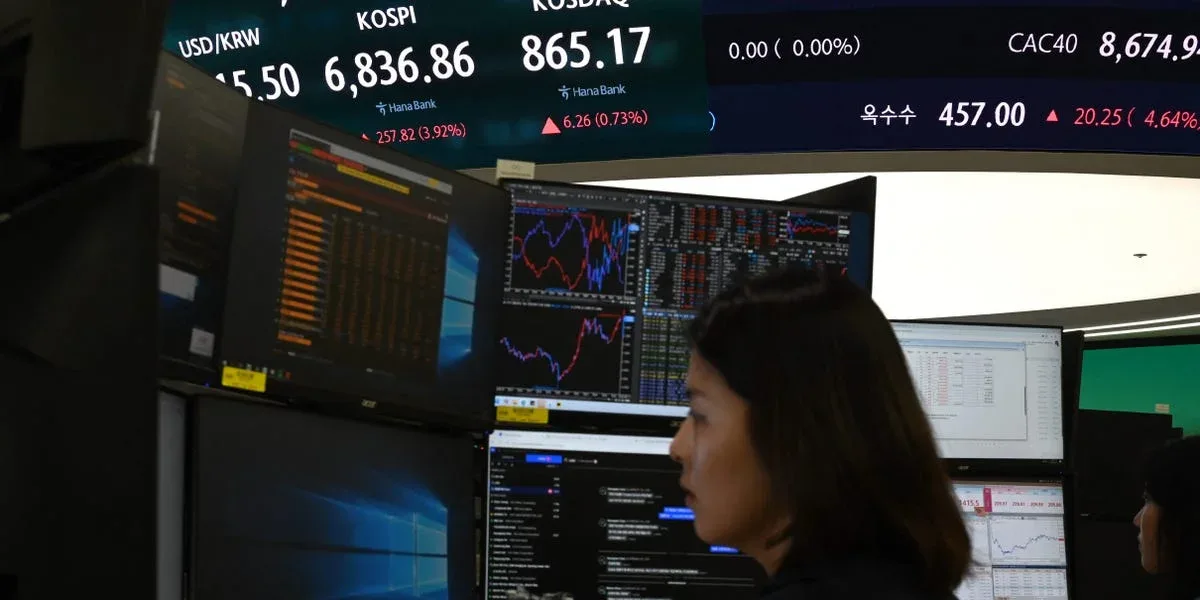
South Korea's stock market has experienced a significant resurgence, marking a notable shift in its trajectory over the past few weeks. After enduring a tumultuous period, the market has rebounded and is now technically considered a bull market. This development comes on the heels of a sharp decline that had investors on edge. The benchmark Kospi index, which serves as a key indicator of the market's performance, closed 4% higher on Thursday, underscoring the market's newfound momentum.
Market Rebound
The Kospi's recent gains have been substantial, with the index now standing 22% above its low point on July 30. This increase meets the commonly accepted definition of a bull market, which is typically characterized by a rise of 20% or more from a recent low. The swift turnaround in the market's fortunes is a testament to the inherent volatility of the stock market, where sentiment can shift rapidly. The Kospi's ascent is all the more notable given the brutal selloff that preceded it, which had wiped out significant gains and left investors reeling.
The decline that began in late June was particularly pronounced, with the Kospi index plummeting about 40% from its peak on June 22 to its trough on July 30. This sharp downturn was exacerbated by a selloff in index heavyweights such as Samsung Electronics and SK Hynix, which amplified losses and contributed to the market's downward spiral. The fact that the market has been able to rebound so quickly is a positive sign, suggesting that investor sentiment has improved and that the market is once again poised for growth.
Economic Indicator
The resurgence of the South Korean stock market is likely to be closely watched by investors and analysts, who will be seeking to understand the underlying factors driving this trend. As one of the major economies in Asia, South Korea's stock market is an important bellwether for the region's economic health. The performance of the Kospi index, in particular, is closely tied to the fortunes of the country's largest companies, including Samsung Electronics and SK Hynix, which are major players in the global technology sector.
The technical bull market designation is likely to boost investor confidence, as it suggests that the market has turned a corner and is now on an upward trajectory. However, it remains to be seen whether this momentum can be sustained, and investors will be closely monitoring the market's performance in the coming weeks and months. With the global economy still navigating uncertain waters, the South Korean stock market's ability to maintain its current momentum will be an important indicator of the region's economic resilience.
Future Outlook
As the South Korean stock market continues to evolve, investors will be keeping a close eye on the Kospi index and the performance of key companies such as Samsung Electronics and SK Hynix. The market's ability to sustain its current momentum will depend on a variety of factors, including the overall health of the global economy and the continued growth of the technology sector. If the market is able to maintain its current trajectory, it could have a positive impact on the broader economy, driving growth and investment in the region. However, if the market falters, it could have significant implications for investors and the economy as a whole.
Source: businessinsider.com · 2026-08-13