The Fed Rate-Hike Won't Fix The Inflation It Targets

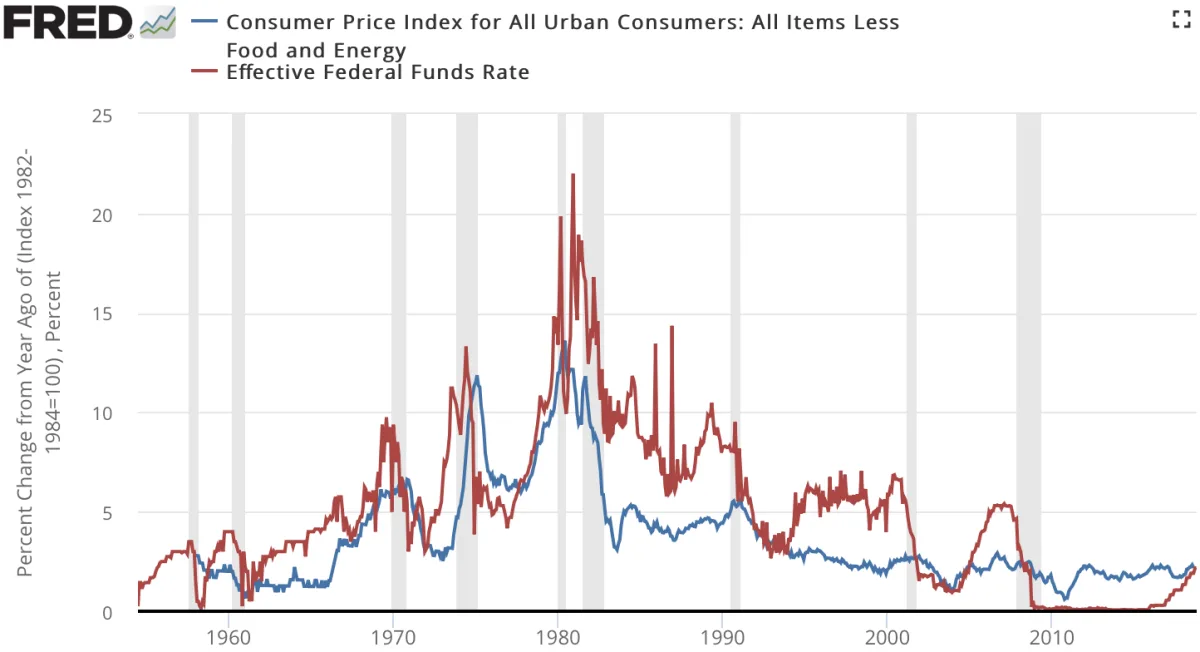
The Federal Open Market Committee voted unanimously to lift the target range for the federal funds rate by a quarter‑point, moving it to 3.75 percent‑4.00 percent. This marks the first increase since 2023 and is officially justified as a step toward “price stability.” The Fed’s chairman has spent the past year arguing that real growth does not generate inflation and that most of the current price pressures stem from forces beyond the central bank’s control.
FED Rate Hike
Bond‑market pressure was the catalyst for the move. Kevin Warsh had previously urged that the market itself signal the need for tighter policy, and the market delivered. On the Wednesday of the decision, the 10‑year Treasury yield climbed to roughly 5.01 percent, a level not seen in 19 years, while the 30‑year yield rose to about 5.35 percent. The clear message from investors was that rates needed to rise, or the market would push back.
Interest‑rate Limits
The Fed’s tool works by making borrowing more expensive across the economy. Higher policy rates raise the cost of credit, which first dampens demand for mortgages, auto loans, capital expenditures and other loan‑dependent purchases. As that demand eases, firms and consumers lose some ability to bid up prices, and the inflationary pace slows. In the Fed’s own language, the goal is really to stabilize expectations rather than to directly control prices.
Supply‑side Reality
Warsh reminded participants that a higher fed funds rate cannot drill a well, end a war, or reopen the Strait of Hormuz. The policy instrument touches only the demand side of the ledger; when inflation is driven by supply constraints, a demand lever pulls on the wrong rope.
Inflation Blend
The term “inflation” masks two distinct forces. A smartphone becomes cheaper because of globalized production, while oil prices surge when a conflict threatens supply lines. No interest‑rate adjustment can produce either outcome. When Warsh suggests the Fed cannot fix prices, the narrow truth is that monetary policy cannot resolve a supply‑driven, relative‑price shock; it can only compress demand until something breaks.
Headline Inflation
Headline inflation registered 3.4 percent in August, but the energy component alone contributed 16.9 percent. Removing the war‑related spike makes the overheating narrative far less convincing. The situation reflects a supply line under fire rather than a demand‑driven economy running too hot.
Credibility
The Fed’s credibility rests on taking visible action, even if it cannot directly lower crude prices. The committee’s statement read: “Inflation remains elevated. Today’s policy action will support a timelier return to the Committee’s 2 percent goal.” – FOMC statement, September 16 2026. The dot plot shows sixteen of eighteen officials anticipate at least one more hike this year, with four penciling in two. The neutral rate is pegged at 3.1 percent, while the current funds rate sits at 3.875 percent and is projected to reach a median of 4.1 percent by year‑end, putting the Fed roughly 90 basis points into restrictive territory despite Warsh’s claim that conditions are not “broadly restrictive.”
Potential Danger
With little margin for error, the Fed is tightening to counter an oil‑price shock. If energy costs stay high, continued hikes could deepen the slowdown; if oil prices retreat, the inflation impulse fades quickly and the same rate increases may over‑tighten the economy. Both paths converge on a scenario where the central bank must scramble to correct an overshoot, risking stagflation, slower growth and higher unemployment.
Source: zerohedge.com · 2026-09-20