Trump made 21,000 trades last year. Here's one way you can trade like the president.

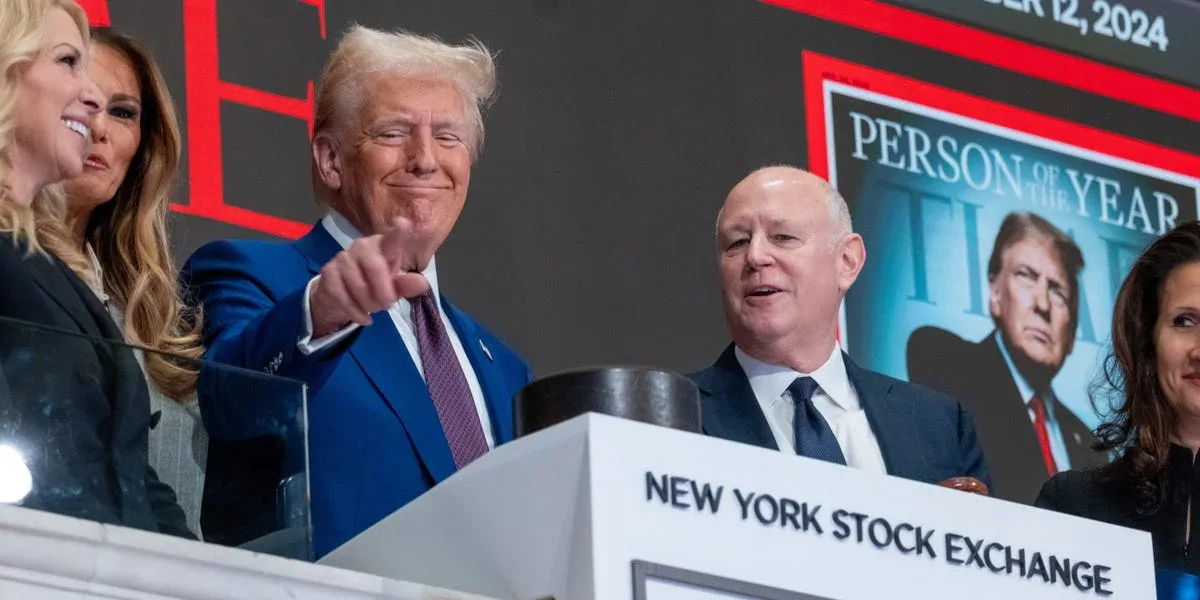
Trump's Trading Habits Spark Interest in Direct Indexing
Last year, President Trump made 21,000 trades, a staggering number that surpasses any other president and likely any other politician. These trades generated over $2 billion in income, with a significant portion coming from cryptocurrency investments. The Trump Organization has explained that these trades are automated, but investors and financial advisors are speculating that the president may be part of a growing trend of investors using direct-indexing strategies to capture the returns of an index while minimizing their tax liability.
The Rise of Direct Indexing
Direct indexing has experienced rapid growth, with assets under management reaching $864 billion by the end of 2024, according to Cerulli Associates. This represents a significant increase from 2020, as technology has made it more affordable for everyday investors to run these strategies. Wealthfront, a leading investment platform, credits itself with coining the term "direct indexing" in 2012 and oversees $99 billion in client assets. The company's vice president of investment research, Alex Michalka, notes that a single medium-sized direct indexing account on the platform made over 4,500 distinct trades in large-cap companies in 2025 to maximize tax savings.
Tax Efficiency and Direct Indexing
Direct indexing allows investors to own the underlying stocks directly, enabling them to trade individual names while still tracking an index's performance. This strategy is based on the concept of "dispersion," which refers to the difference between individual stock returns and an index's overall performance. Even if the market is up, some stocks will inevitably be down, and by trading individual stocks, investors can claim losses against their capital gains or other sources of income. This can result in significant tax savings, as investors can defer written-off taxes until they liquidate their portfolio.
Expert Insights on Direct Indexing
We spoke to financial advisors and experts to gain a deeper understanding of direct indexing and its potential benefits. Gabriel Shahin, a financial advisor who founded Falcon Wealth Planning, notes that direct indexing used to be a strategy reserved for the wealthy due to high management costs and the costs of individual trades. However, with the advancement of technology, this strategy is now more accessible to everyday investors. Shahin emphasizes that direct indexing can be an effective way to reduce taxes, but it requires careful management and a deep understanding of the underlying stocks.
The Trump Organization's Response
The Trump Organization has responded to Democratic lawmakers' requests for information about who manages the president's accounts, calling the inquiry a "baseless political stunt." The organization claims that the president's accounts are managed by independent third-party managers, and that Trump and his circle do not have the ability to influence the investments, in order to avoid any potential conflict of interest.
Source: businessinsider.com · 2026-08-16