U.S. Imposes Tariffs Up To 100% on Imported Drones

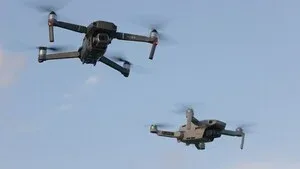
The United States has taken a significant step to protect its domestic drone industry by imposing tariffs of up to 100% on imported drones and related parts, primarily targeting China, which dominates a substantial portion of the global drone market. This move is seen as an effort to strengthen the US drone industry and supply chain, addressing concerns over national security threats posed by drone imports. On August 13, US President Donald Trump signed a proclamation to implement these tariffs, following a Section 232 of the Trade Expansion Act investigation report submitted by US Secretary of Commerce, although the report was actually submitted by U.S. Secretary of Commerce Wilbur Ross, not Howard Lutnick, who is the CEO of Cantor Fitzgerald.
Tariff Details
The investigation report highlighted the United States' excessive dependence on foreign drones and parts, with foreign products having significant market penetration. In response, the proclamation outlines differential tariff rates based on the weight and purpose of the drones. Drones with a maximum takeoff weight exceeding 25 kilograms, as well as those equipped with sensitive functions such as thermal imaging, docking stations, and core parts, will be subject to a 100% tariff. On the other hand, small drones with a maximum takeoff weight of 25 kilograms or less, and some parts, will face a tariff rate of 25%. This tiered approach aims to balance the need to protect national security with the need to allow for the importation of certain drone products.
The tariffs will not be uniformly applied to all countries. Major allied countries, including South Korea, will receive relatively low tariff rates. Drones and parts from South Korea, the European Union, Japan, Taiwan, Switzerland, and Liechtenstein will be subject to a maximum tariff of 15%. Products from the United Kingdom will face a tariff of up to 10%. Nevertheless, to qualify for these lower tariff rates, virtually all core parts and technology must originate from the respective country or the United States. This requirement is intended to ensure that countries that are considered allies of the US are not unduly burdened by the tariffs.
Implementation Timeline
The implementation of these tariffs will be phased in over time. Items subject to the 100% tariff, as well as small drones facing a 25% tariff, will begin to be applied at 12:01 a.m. Eastern Time on September 3. Additionally, a 25% tariff on some drone parts with low national security sensitivity is scheduled to be imposed starting on February 9 next year. This move is expected to have significant implications for the global drone industry, particularly for Chinese manufacturers, which will need to reassess their export strategies to the United States. The phased implementation is intended to give companies time to adjust to the new tariff regime and to minimize disruptions to the supply chain.
The US drone industry is a significant sector, with applications in various fields such as agriculture, construction, and surveillance. By imposing these tariffs, the US government aims to promote the growth of domestic drone manufacturers and reduce dependence on foreign imports. While the move may provide a boost to the US drone industry, it may also lead to increased costs for consumers and businesses that rely on imported drones and parts. As the global drone market continues to evolve, the impact of these tariffs will be closely watched by industry stakeholders and analysts. The long-term effects of the tariffs will depend on a variety of factors, including the response of foreign governments and the ability of US companies to fill the gap in the market created by the tariffs.
Source: businesskorea.co.kr · 2026-08-14